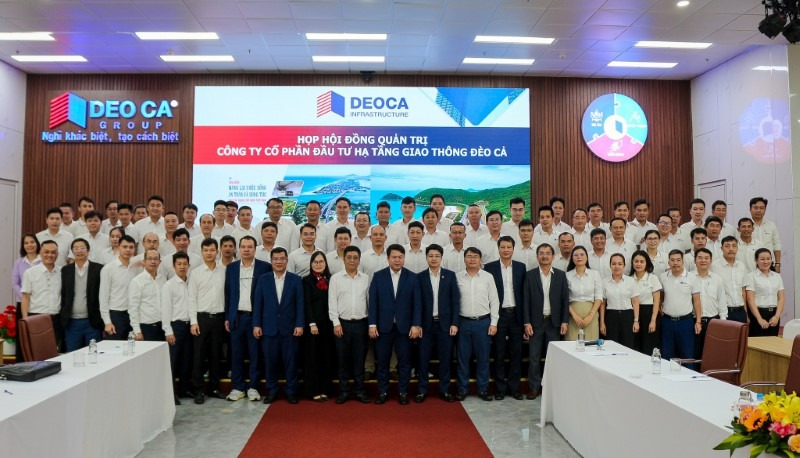


On August 6, 2026, in Da Nang, Deoca Group held its conference to review performance in the first half of 2026 and set out plans for the remaining six months. The conference focused on assessing results, identifying bottlenecks and agreeing on solutions across three key areas: “People Management – Work Management – Benefit Management” with each target linked to a clearly designated person in charge and measurable outcomes.
The conference was chaired by Mr. Ho Minh Hoang, Chairman of the Board of Directors, and attended by members of the Advisory Council, Board of Directors and Management Board, leaders of member units and project management boards, as well as representatives of Deoca’s partners and educational institutions.
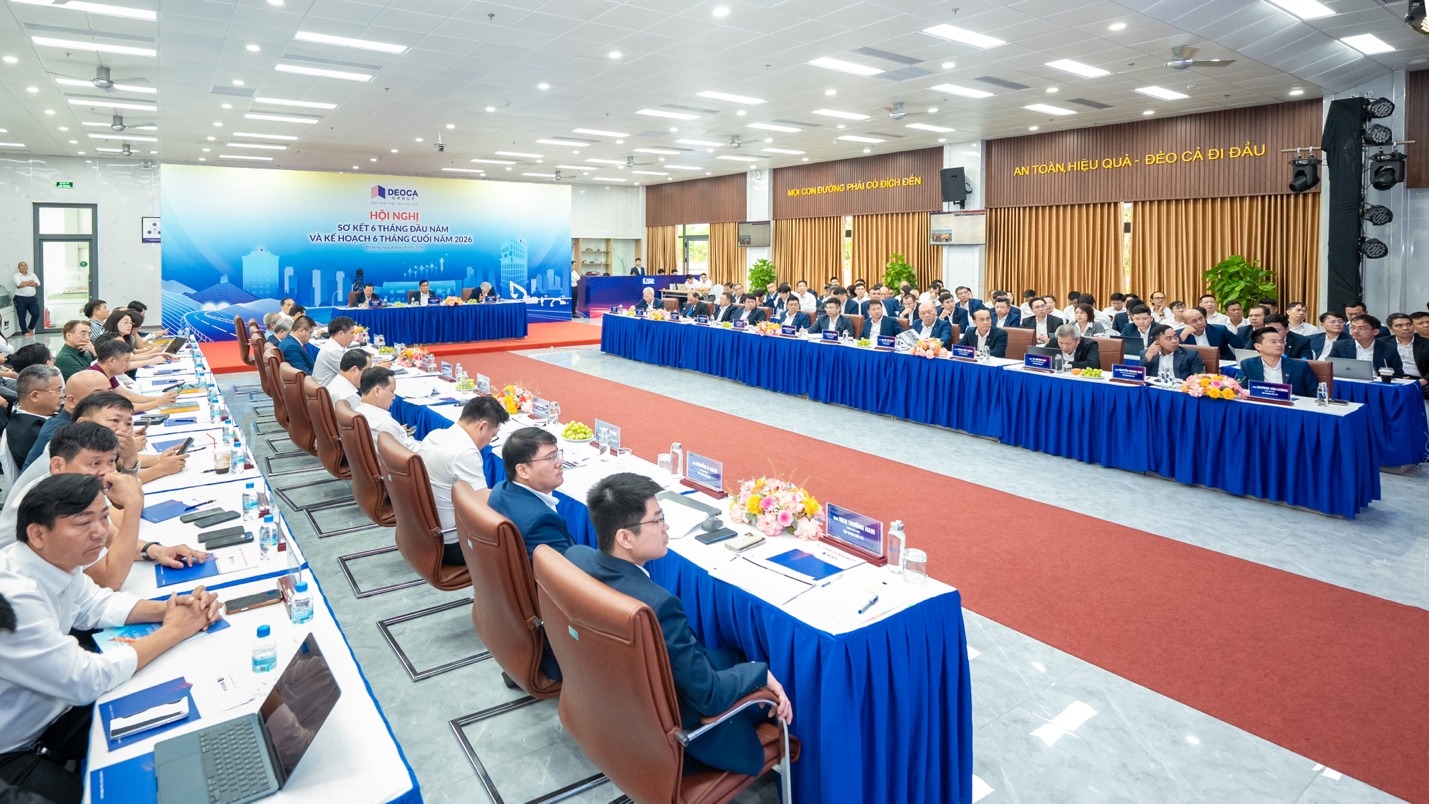
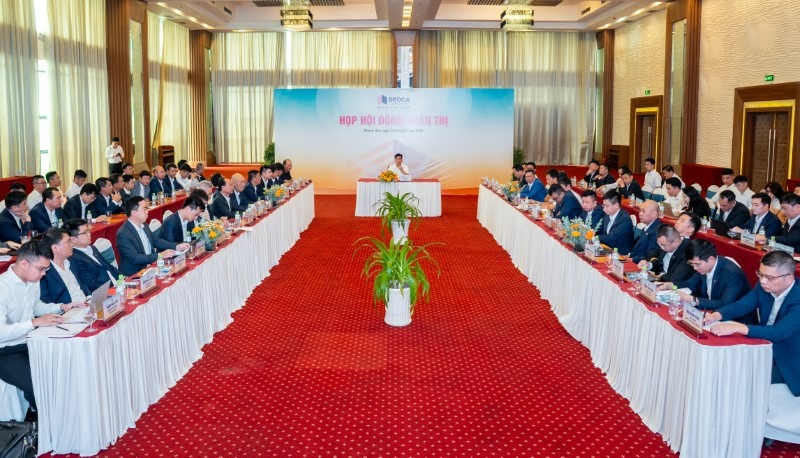
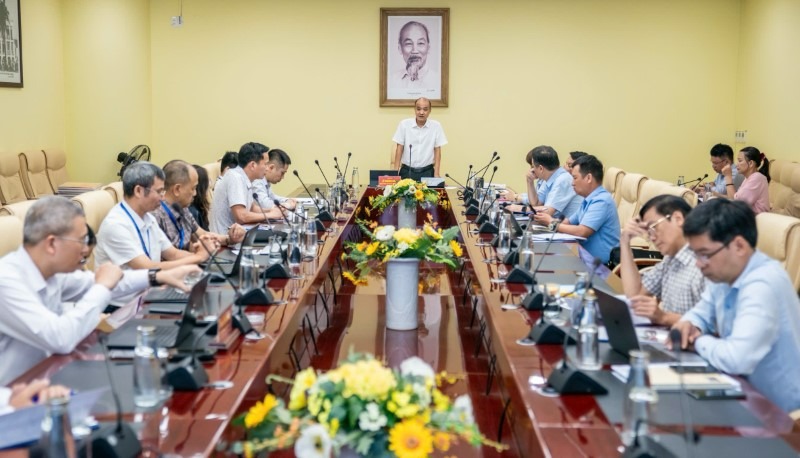
Overview of the conference.
Staying the course with a “Focused Growth” strategy
In his opening remarks, Mr. Ho Minh Hoang noted that Deoca currently has no shortage of projects or opportunities. However, as the Group continues to expand, it cannot handle a growing workload using old methods. Instead, it must change the way it organizes operations and strengthen the capacity of the entire system.
“This conference is not about reporting for the sake of reporting. It is about aligning our understanding, defining accountability and taking action”, Mr. Ho Minh Hoang emphasized.
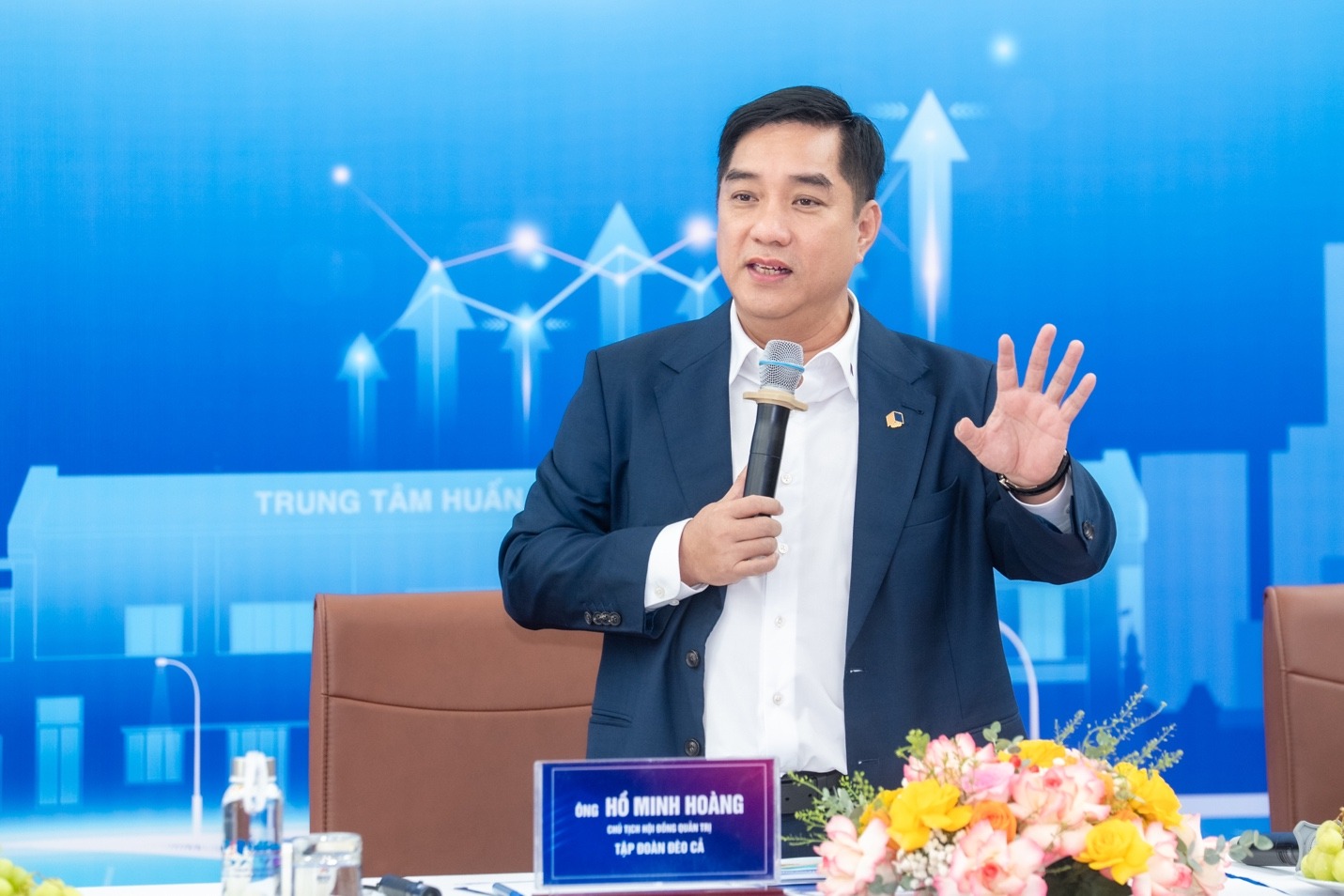
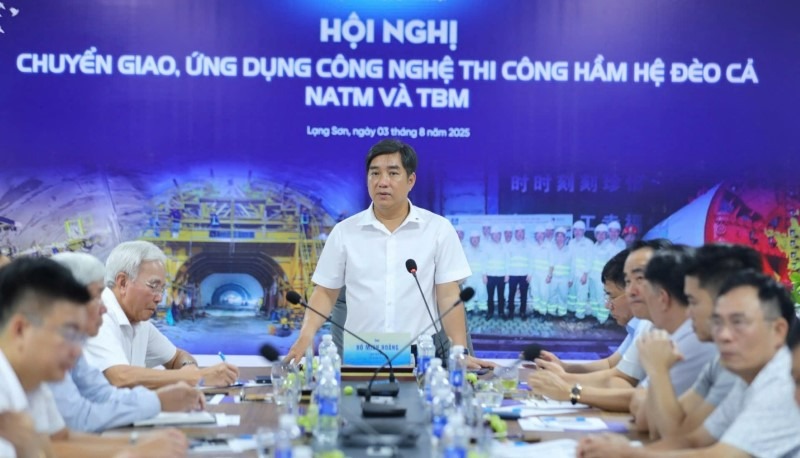
Mr. Ho Minh Hoang, Chairman of the Board of Directors, chairs the conference.
Deoca remains committed to its “focused growth” strategy built around three pillars: investment, construction and operation - management of infrastructure project. Across all three regions of Vietnam, Deoca Group and its member companies are simultaneously implementing numerous key projects.
Video: First-Half 2026 Review.
In the North, the Group is implementing 16 projects, including Dong Dang – Tra Linh Expressway phases 1 and 2, Huu Nghi – Chi Lang Expressway, Tuyen Quang – Ha Giang Expressway, Cho Moi – Bac Kan Expressway, Vinh – Thanh Thuy route and Hoang Lien Tunnel. Newly signed contracts total approximately USD 94.4 million, while projects under investment study have a combined estimated value of more than USD 5.97 billion.
In the Central region, the Group is implementing 13 projects, notably the completion of Phase 2 of three mountain tunnels on Quang Ngai – Hoai Nhon Expressway, Khanh Hoa – Buon Ma Thuot Expressway, Phase 2 of Cam Lo – La Son Expressway, Da Nang’s Western Ring Road and the expansion of Nui Vung Tunnel. Newly signed contracts total approximately USD 57 million, while new projects under investment study have a combined estimated value of nearly USD 3.50 billion.
In the South, 13 projects are currently underway, including the expansion of Ho Chi Minh City – Trung Luong – My Thuan Expressway, Ho Chi Minh City – Long Thanh Expressway, Ho Chi Minh City Ring Road 3 and Dai Ngai Bridge. Newly signed contracts exceed USD 494 million, while projects under investment study have a combined estimated value of more than USD 3.82 billion.
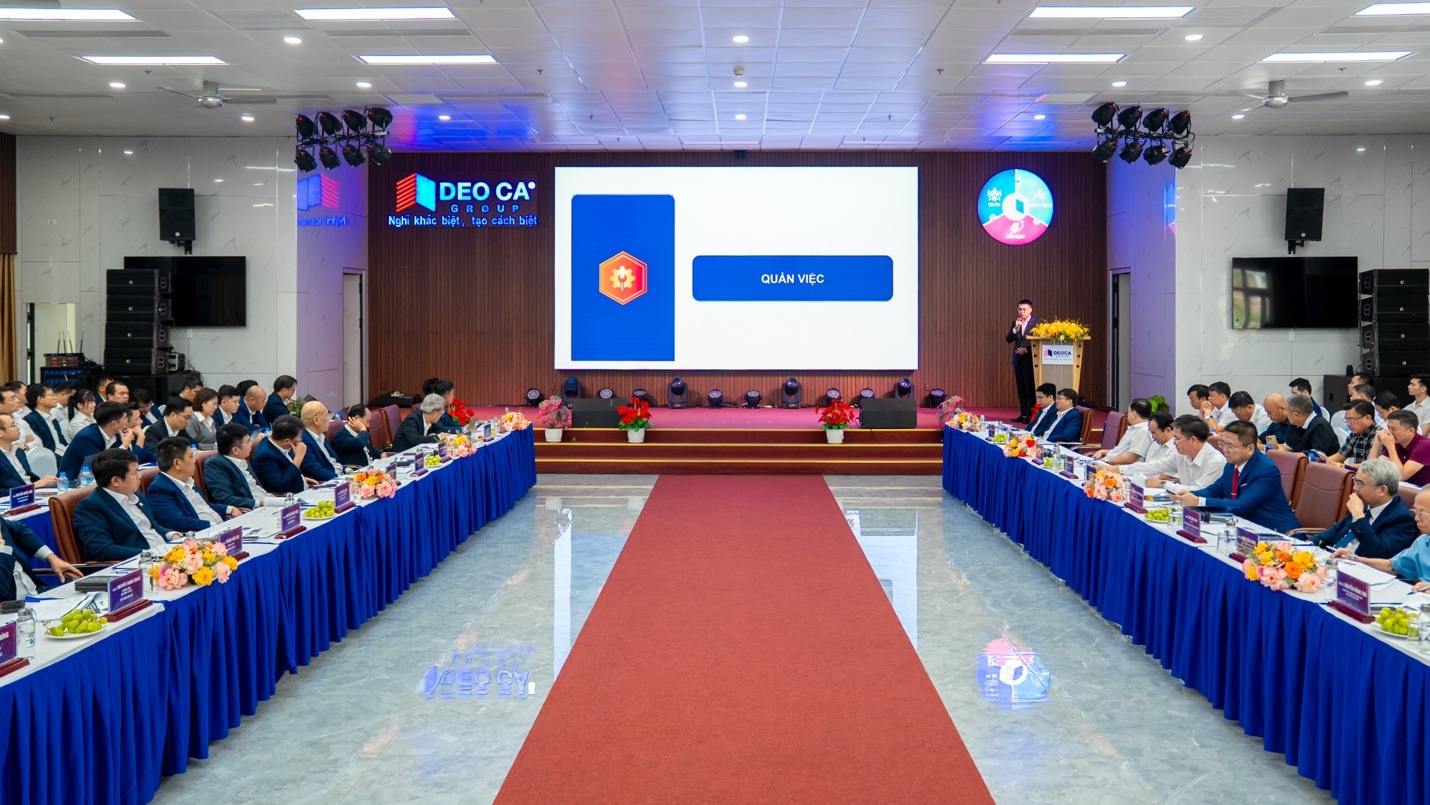
Mr. Pham Ngoc Quy – Chief of the Board of Directors Office – reports on “Work Management.”
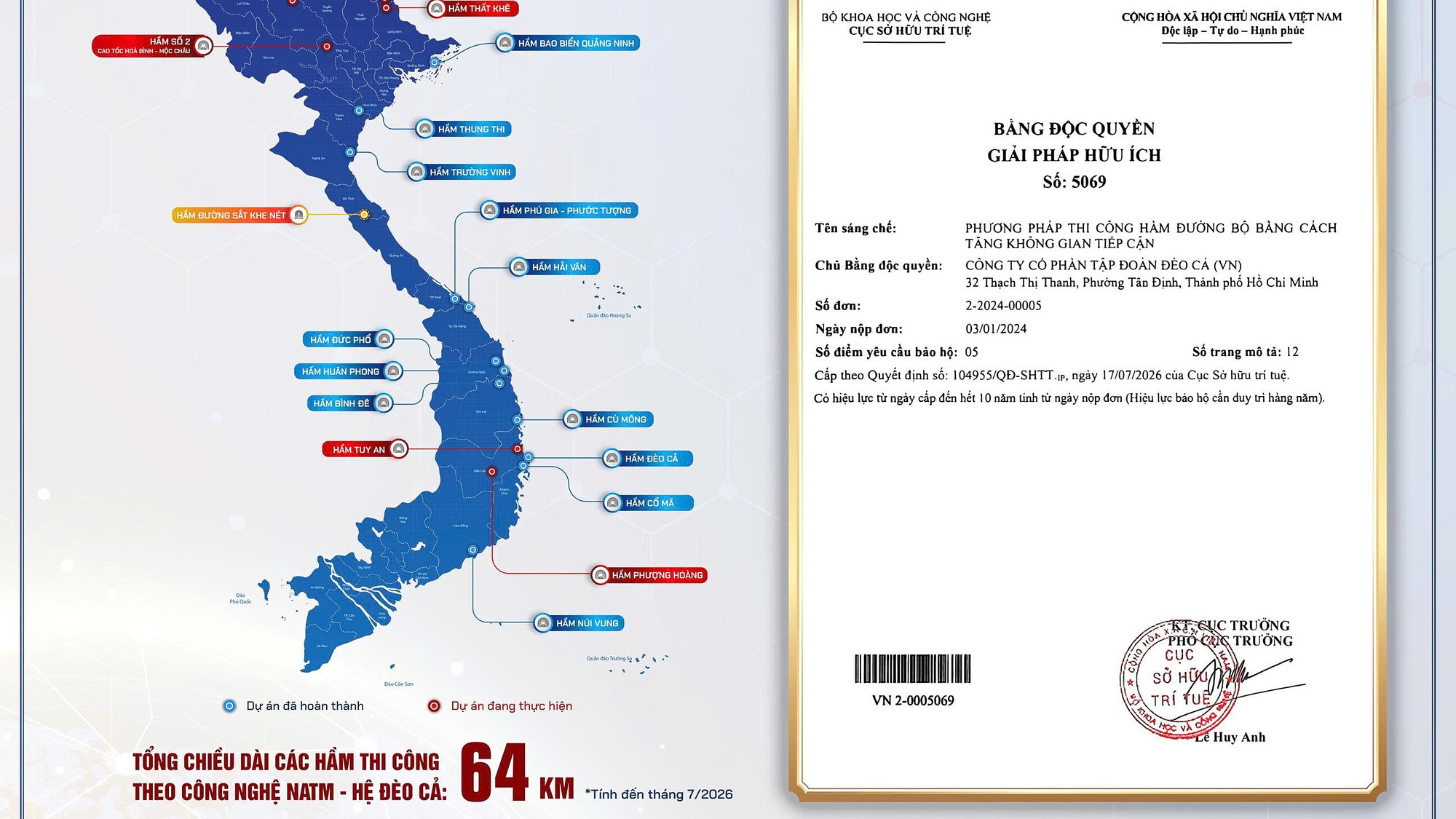
Alongside investment and construction activities, the infrastructure operation and management segment has taken over the management of more than 200 km of North – South Expressway sections passing through Central Vietnam. The addition of these expressways expands stable revenue sources while enabling the Group to accumulate operational data and strengthen its capability to manage modern transport infrastructure, particularly expressways featuring mountain tunnels. This also provides a foundation for further expansion of the Group’s operation and management business.
For 2026, the Group target is approximately USD 820 million in revenue and USD 62.7 million in after-tax profit. At the end of the first six months, total revenue reached approximately USD 293.4 million and after-tax profit stood at USD 26.9 million, representing year-on-year growth of 8%.
However, the Group’s leadership stressed that the size of the project portfolio alone does not constitute an achievement. Each project will proceed only when it aligns with the Group’s strategy and has a sound legal basis, adequate financing and human resources, and demonstrable investment efficiency.
Building human resources through the “Three-Party” cooperation model
With numerous key projects being implemented nationwide, intense competition for human resources has created shortages, particularly among technical staff, consultants, direct construction workers and project documentation personnel.
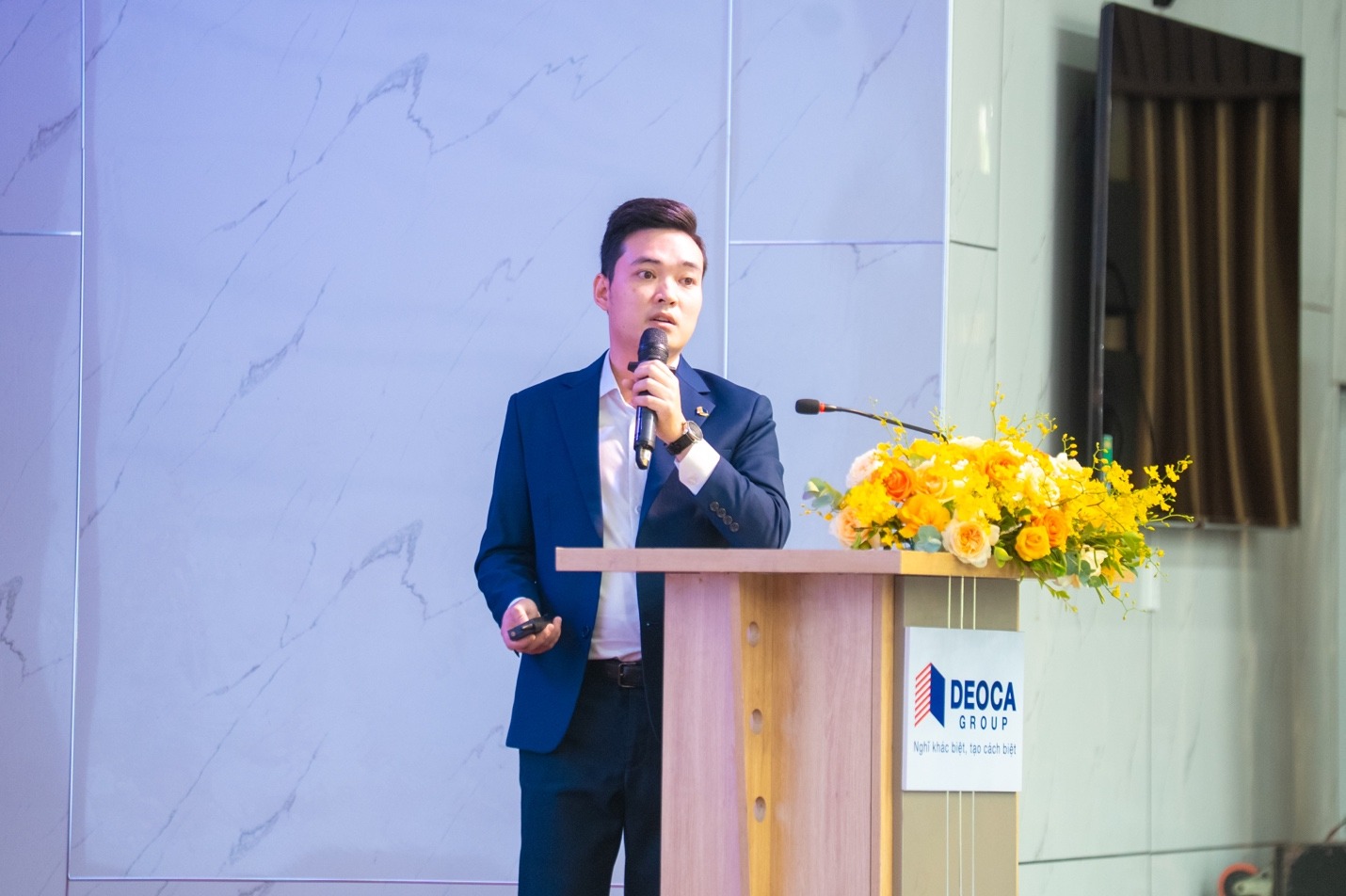
Mr. Le Duc Truong – Director of the Human Resources Department – reports on “People Management.”
To strengthen its workforce, Deoca continues to expand cooperation with universities and vocational schools, linking training programs directly to practical employment needs while organizing professional training and corporate culture integration programs. Deoca’s offices and construction sites have also welcomed 475 students from 10 universities for field visits, internships and corporate semester programs.
Discussing the “Three-Party” cooperation model involving the State, educational institutions and enterprises, Assoc. Prof. Dr. Nguyen Xuan Phuong – Rector of the University of Transport Ho Chi Minh City (UTH) – said UTH and Deoca have implemented the model since 2023 through the establishment of the Deo Ca Research and Training Institute.While university-business cooperation in the past was often limited to visits and introductory activities, this model has been integrated more deeply into academic programs and aligned with actual workforce requirements.
Drawing on the practical experience of this partnership, UTH continues to revise curricula for four disciplines – Transportation Engineering, Civil Engineering, Construction Economics and Construction Project Management – toward a more interdisciplinary approach, incorporating BIM, project management, transit-oriented development (TOD) and artificial intelligence applications.
Students are given more time for hands-on training at construction sites, while training periods are shortened so graduates can meet the workforce needs of businesses and the broader transport and construction market sooner.
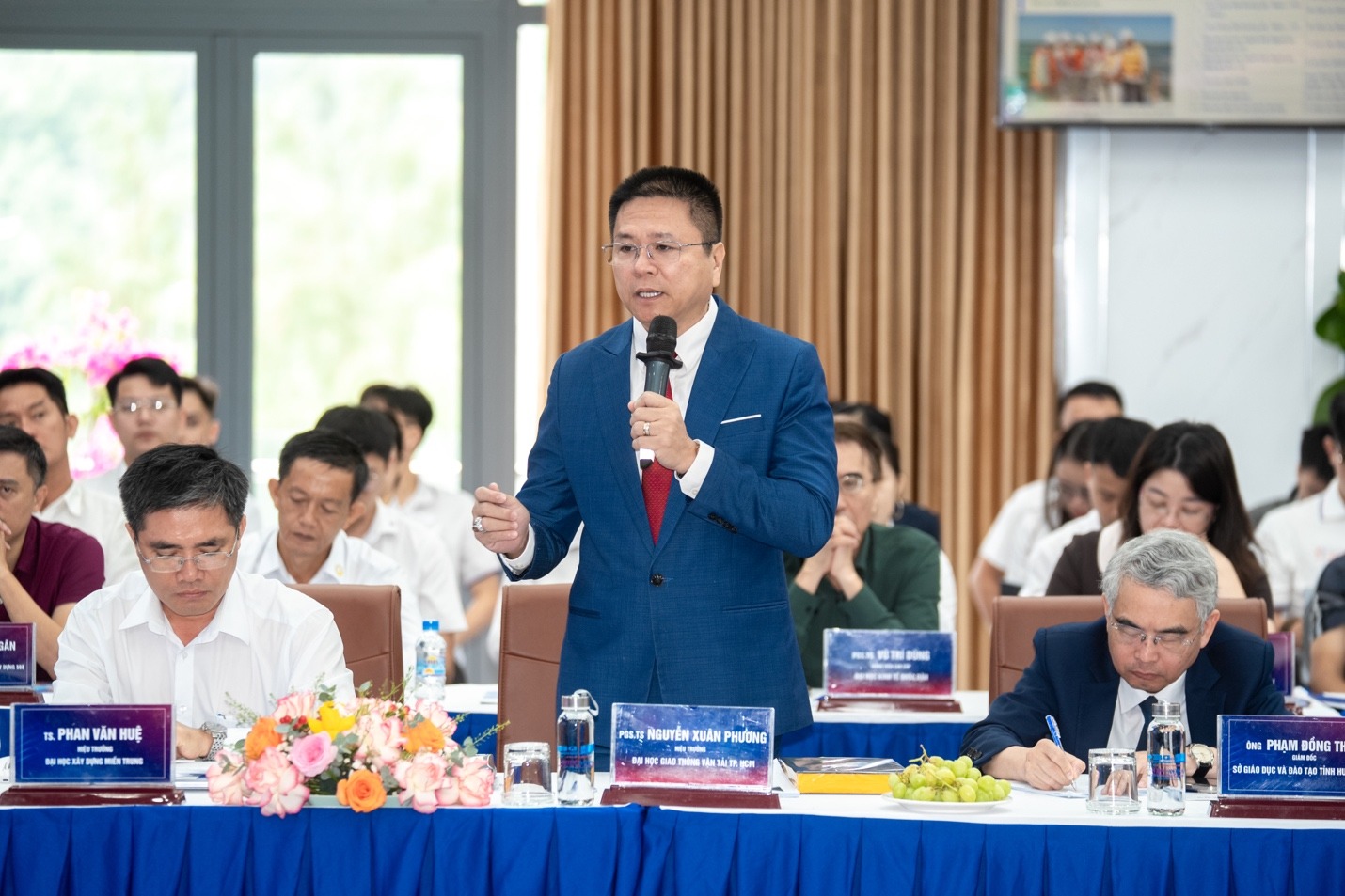
Assoc. Prof. Dr. Nguyen Xuan Phuong speaks at the conference.
“Since the program was introduced, the number of students enrolling in Transportation Engineering has increased significantly. The university has proactively expanded its enrollment capacity while committing to ensuring both the quantity and quality of graduates needed by Deoca Group and the transport and construction sector in the coming period,” Assoc. Prof. Dr. Nguyen Xuan Phuong said.
Mr. Ho Minh Hoang stressed that training must be closely linked to actual deployment and job performance. The Executive Board and Human Resources Department must review each project and position to identify employees who can continue to take on responsibilities, those requiring further training or reassignment, and those who no longer meet job requirements.
At the same time, executives in charge must develop succession teams for each management and operational position, particularly in critical business areas.
Building a foundation for stable and sustainable development
Regarding “Work Management,” the Group’s leadership required every task to have one person ultimately accountable, with the scope of work, deadlines and expected deliverables clearly defined.
The “Assign – Contract – Manage” mechanism will continue to be refined to ensure that task assignments are accompanied by appropriate resources, authority, accountability and control mechanisms.
Contractors and partners will be classified according to their actual capabilities. Underperforming units will be required to add resources, have their workload reduced or be handled in accordance with contractual provisions to prevent them from affecting overall progress.
The Advisory Council will also be involved earlier in matters relating to mechanisms and policies, legal affairs, finance, engineering, risk management and project security, rather than being consulted only after problems arise.
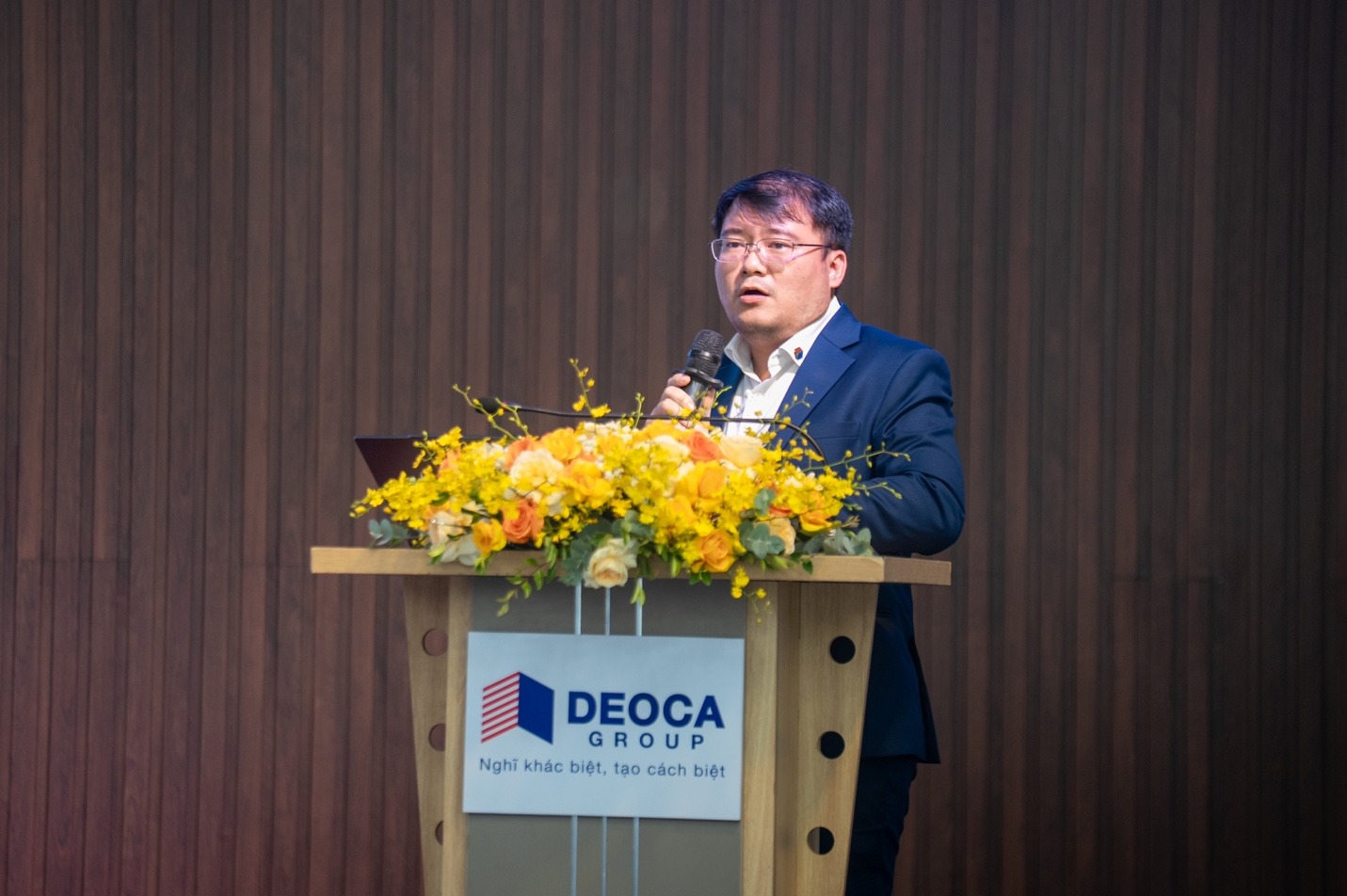
Mr. Nguyen Le Bach – General Director of Deoca Group – reports on “Benefit Management.”
During the discussion, Mr. Nguyen Xuan Hai – Chairman of the Board of Directors of 559 Expressway Investment Joint Stock Company – said he was impressed by Deoca’s reports, in which information and figures were presented in detail, the efficiency of individual projects was clearly analyzed, and capital was allocated according to specific objectives and timelines, demonstrating the Group’s systematic approach to management.
“Experience shows that successfully implementing large-scale projects requires more than strong execution capabilities. Developing sound financial plans and arranging credit financing are particularly important. This is also an area in which 559 Company hopes to continue learning from Deoca throughout our cooperation,” Mr. Hai shared.
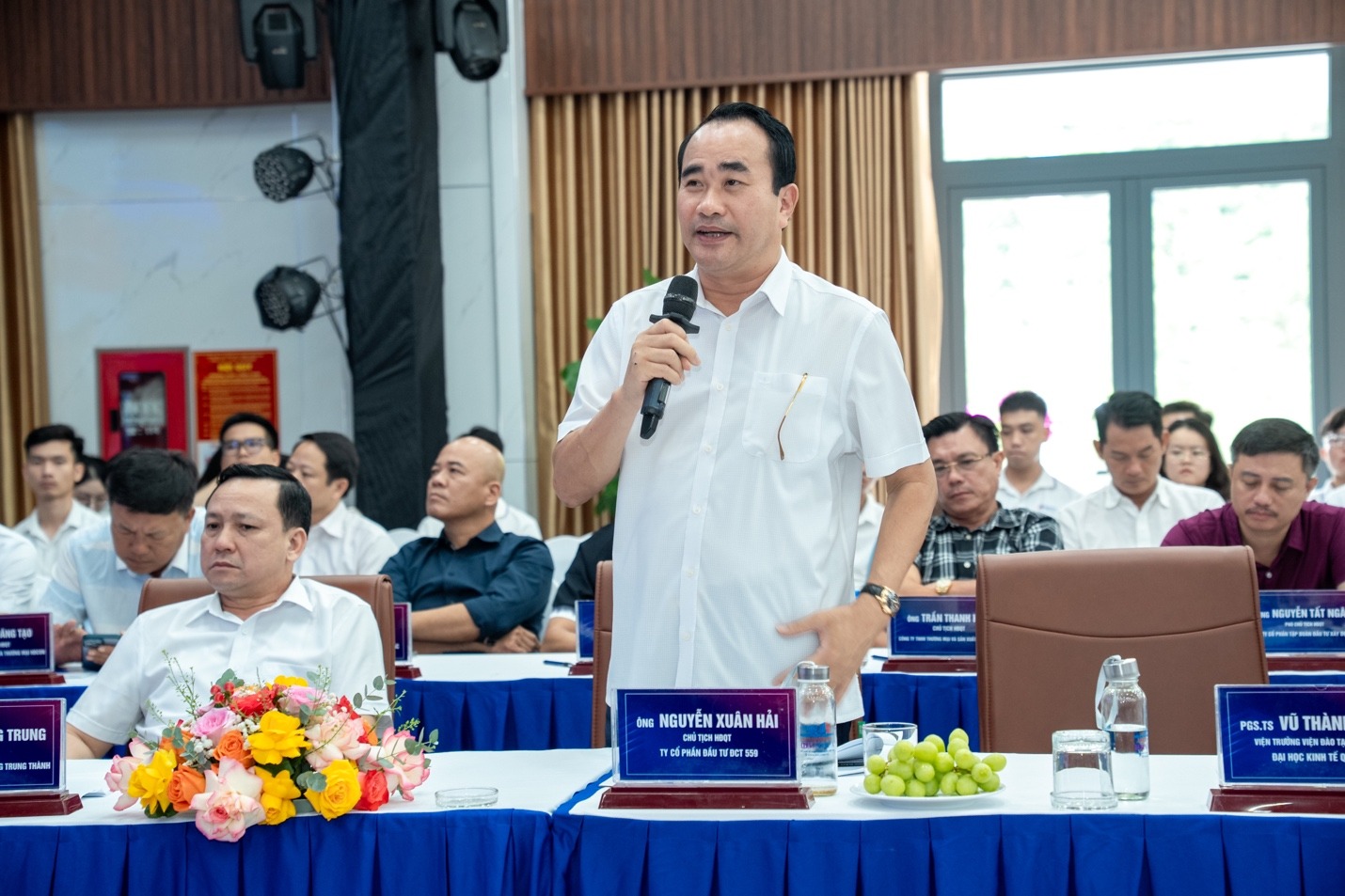
Mr. Nguyen Xuan Hai speaks at the conference.
Mr. Ho Minh Hoang noted that every project has different characteristics and financing arrangements. Funding sources must therefore be selected on the basis of robust financial plans that take into account price fluctuations and the ability to control risks.
“We do not make ‘adventurous’ investment decisions,” Mr. Ho Minh Hoang affirmed.
The Group will continue improving the efficiency of resource management in line with its sustainable development strategy. Member companies are required to strengthen cost control, improve the utilization of machinery, equipment and materials, and manage risks throughout project implementation.
The overarching objective is to create balanced value for the enterprise, employees, partners and the State, thereby building a stable, sustainable and long-term foundation for development.
Concluding the conference, Mr. Ho Minh Hoang acknowledged the business performance achieved across the Group but emphasized that the organization must not become complacent.“People Management – Work Management – Benefit Management” must operate as an integrated system, ensuring the right people are assigned, tasks and responsibilities are clear, and performance can be effectively controlled.
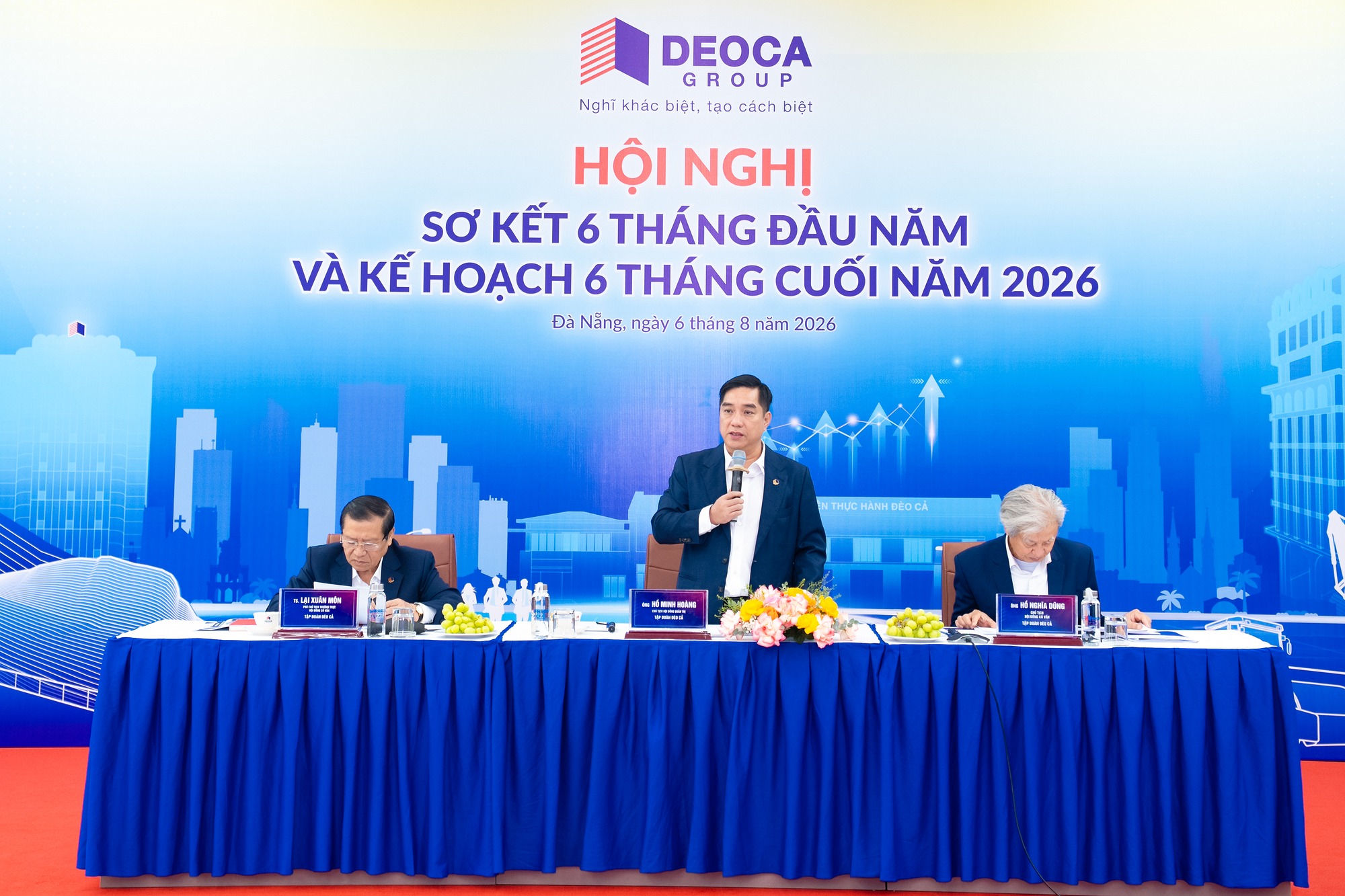
Mr. Ho Minh Hoang, Chairman of the Board of Directors, delivers his concluding remarks.
“Reports cannot replace results. Explanations cannot replace accountability,” the Chairman emphasized.
He instructed executives in charge to review all targets, tasks and projects within their areas of responsibility from now until the end of the year. Actual performance will serve as the basis for assessing accountability, rewards, succession planning, appointments, personnel reassignment and task allocation for 2027.
Enhancing Investment and Project Management Efficiency
Optimizing investment efficiency was one of the key issues raised by senior advisors at the Advisory Council meeting.
According to the advisors, although infrastructure operation and management contributes a significant share of profit, the segment has yet to establish a position commensurate with the scale of the infrastructure under management, its accumulated experience and its strategic role within the Group’s ecosystem. Current results indicate that considerable potential remains untapped.
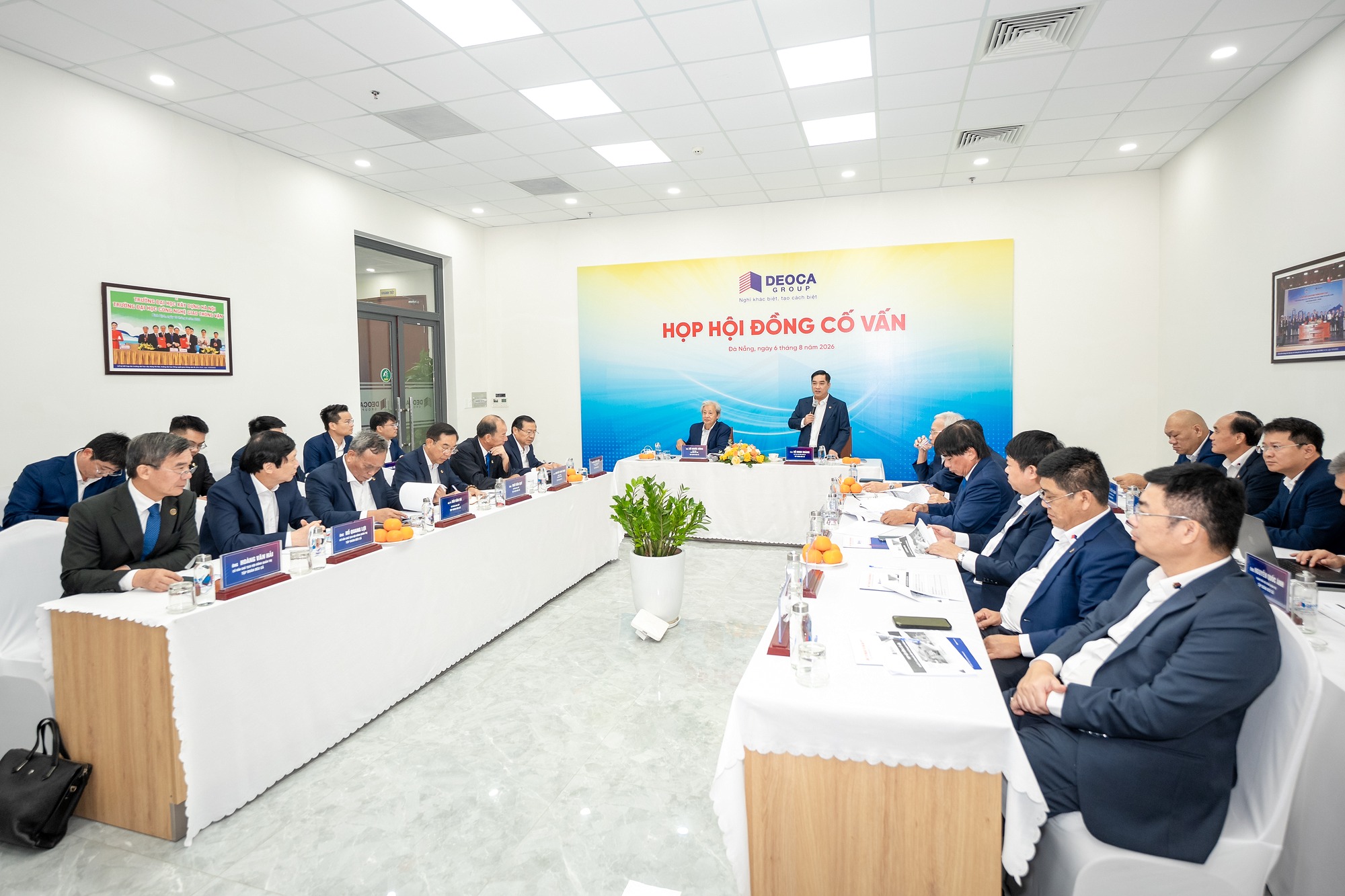
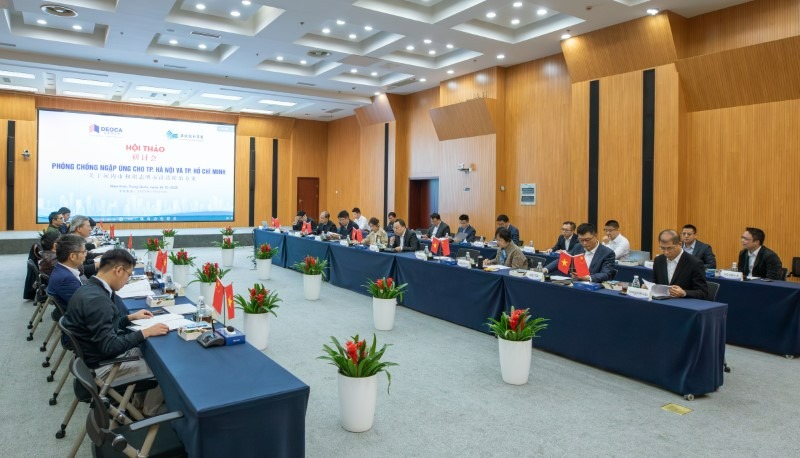
Overview of the Advisory Council meeting.
Members of the Advisory Council recommended a decisive shift in infrastructure operation and management from traditional methods toward a modern model built on data and digital technology. This transition is expected to develop distinctive capabilities and meet the increasingly demanding requirements of modern transport infrastructure systems.
At the meeting, the Advisory Council reported that it had consolidated its membership and assigned responsibilities across nine areas of expertise. Members were assigned to monitor 59 projects nationwide and assess the implementation of 10 sets of conclusions issued following site inspections and specialized working sessions.
During the second half of the year, the Advisory Council will focus more deeply on key areas including engineering, technology and digital transformation; project security; training, communications, corporate culture and policy review.
Mr. Ho Minh Hoang requested that advisors become involved at an earlier stage of project implementation, proactively identify bottlenecks, issue risk warnings and propose solutions, particularly as the Group’s scale of operations continues to expand.
With a strengthened structure, clearly defined individual responsibilities and an action program closely aligned with practical requirements, the Advisory Council will continue enhancing the quality of its advice, independent review and support in addressing emerging issues. Through these efforts, it will contribute to standardizing management practices, improving resource efficiency and strengthening the Group’s capability to manage its nationwide project portfolio in a coordinated manner.
By Lam Tra – Photos by To Hung