

With approximately USD 32.05 billion needing to be mobilized from outside the state budget for expressway development from 2026 to 2030, Mr. Ho Minh Hoang, Chairman of the Board of Directors of DEOCA Group, said that attracting long-term capital requires each project to be prepared on the basis of transparent data, an appropriate structure and clear risk allocation. Experience from projects involving DEOCA Group also shows that PPP can effectively mobilize private resources when the State and businesses work together to structure projects appropriately from the outset.
On September 29, 2026, the Ministry of Construction held a conference in Hanoi to promote investment in expressway development for the 2026–2030 period. The conference was chaired by Minister of Construction Tran Hong Minh and focused on development orientations, expansion of the expressway network and ways to mobilize social resources through public-private partnerships (PPP).

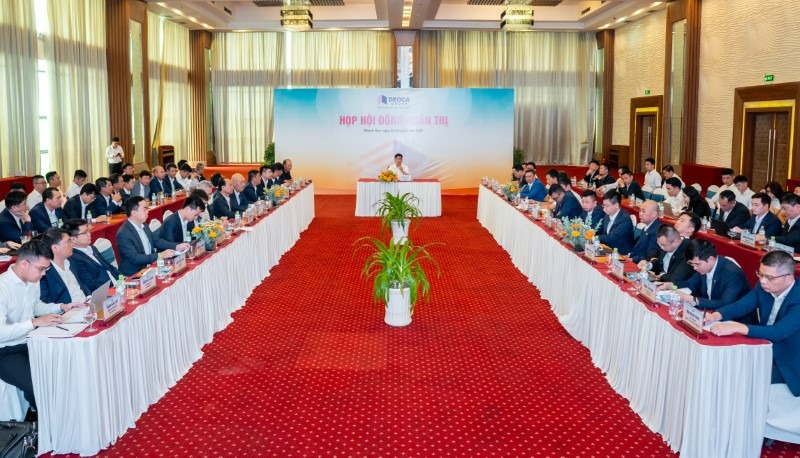
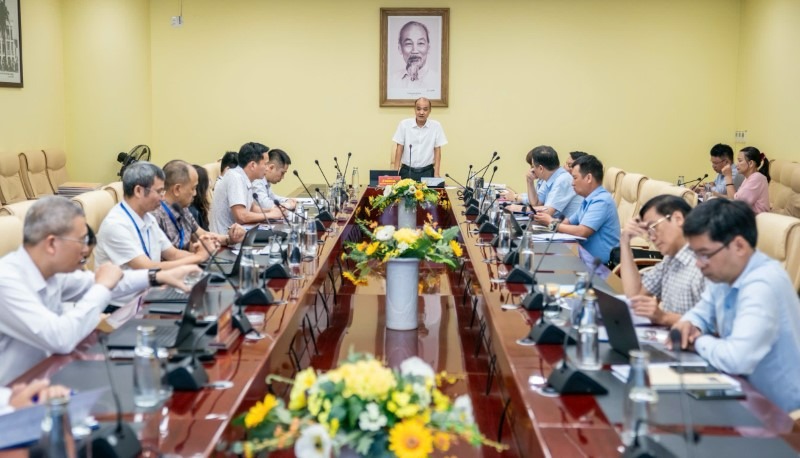
A panoramic view of the conference.
According to Minister Tran Hong Minh, investment in expressways over the next five years will require approximately USD 48.07 billion. The state budget is expected to cover USD 16.02 billion, while approximately USD 32.05 billion must be mobilized from other sources.
The Ministry of Construction also announced a list of 29 priority projects seeking investment under the PPP model, with a preliminary total investment of approximately USD 34.96 billion. This substantial funding requirement creates opportunities for private-sector participation while underscoring the need for appropriate project structures to attract and retain capital throughout the investment life cycle.
Attracting long-term capital requires consideration of both revenue and risk
Drawing on years of direct involvement in investing in, constructing and operating PPP projects, Mr. Ho Minh Hoang, Chairman of the Board of Directors of DEOCA Group, said that encouraging private-sector investment in infrastructure was the right policy. The spirit of Resolution No. 68-NQ/TW also reflects a new perspective on the private economy: businesses should not merely participate in the market but should work alongside the State to organize and develop the economy.
In the transport sector, effective mobilization of private resources can significantly ease pressure on the state budget. However, Mr. Ho Minh Hoang stressed that mobilizing private capital should not simply mean assigning a project to a business and leaving it to study the project and arrange financing on its own.
“For PPP to succeed, the State and businesses must work together to structure the project from the outset”, he said.

Mr. Ho Minh Hoang, Chairman of the Board of Directors of DEOCA Group, speaking at the conference.
At the conference, when the Minister of Construction presented a revenue growth chart for existing PPP projects, Mr. Ho Minh Hoang raised an additional point: alongside the “revenue chart”, projects also need a “risk chart” covering the entire project life cycle.
While the revenue chart reflects opportunities and the potential for capital recovery, the risk chart should identify variables that could affect investment performance. These include delays in site clearance, fluctuations in material and fuel prices, changes in institutions and policies, and the possibility that actual traffic volumes and revenue may fall below financial projections.
“Identifying growth opportunities is necessary, but we must also clearly identify the variables that could affect a project's performance. Which risks can be controlled, who can control them and how they will be addressed must all be determined during the investment preparation stage”, the Chairman of DEOCA Group said.
Experience from DEOCA Group's projects shows that fluctuations in the prices of asphalt, construction materials, fuel and other inputs can significantly affect costs and construction schedules. If a financial plan is based on only one favorable scenario, a project may become financially unbalanced when actual conditions change.
An investor's capacity to deliver a PPP project is therefore reflected not only in its ability to mobilize capital and organize construction, but also in its ability to identify, quantify and manage risks throughout construction and operation. Risks falling under the State's responsibility must likewise be identified, together with appropriate mechanisms for addressing them, during the investment preparation stage.
“Private capital is always looking for opportunities, but long-term capital only goes where there is trust”, Mr. Ho Minh Hoang emphasized. Such trust depends on well-prepared projects, reliable data, stable policies and clearly defined mechanisms for managing risks.
PPP++ in practice
Building on this approach, Mr.Ho Minh Hoang said that three issues require particular attention when studying the expansion of sections of the eastern North–South Expressway in the coming period.
1 The first, each section should be classified using actual data. Sections that have been in operation for some time now have relatively comprehensive data on traffic volumes and revenue. Sections with strong traffic and revenue, and sufficient capacity to recover their investment independently, should maximize private-sector participation, potentially without State capital. Where traffic is lower and financial viability is more difficult to achieve, the State should contribute an appropriate share of capital to make the project feasible.
For sections connected to existing build-operate-transfer (BOT) and PPP projects, the potential effects on traffic volumes, revenue and existing financial plans must be carefully assessed.
“A new project cannot be made viable by creating difficulties for an existing PPP project. This is a very practical lesson we have learned”, Mr.Ho Minh Hoang emphasized.
The second, there should be no single financial formula for all PPP projects. Some projects may not require State capital; others may need an appropriate State contribution. In some cases, the State may undertake site clearance or invest in connecting infrastructure, while other projects may be able to mobilize resources from multiple participants.
According to the Chairman of DEOCA Group, the investment model should be selected according to each project's characteristics, capacity for capital recovery and risk structure, even when PPP is not the most suitable option.
In response to this need, DEOCA Group proposes the PPP++ approach, which aims to broaden the ecosystem of participants in infrastructure investment. In addition to the State, investors and banks, construction companies, financial investors, and suppliers of materials, equipment and technology should also be enabled to participate in the project value chain.
11 là The first
2 là Firstly

A section of Dong Dang - Tra Linh expressway, developed through capital mobilization under the PPP++ model.
Each participant would contribute its strengths and resources and take responsibility for the tasks and risks it is capable of managing. Many Vietnamese construction companies have technical expertise, equipment and personnel, but not all have the financial capacity to independently undertake a PPP project worth hundreds of millions of USD. An ecosystem that enables multiple businesses to participate together could therefore mobilize greater overall resources for a project.
The Third, investment must be accompanied by a commitment to construction quality and long-term responsibility for the infrastructure. In expanding the North–South Expressway, the new sections will connect directly to infrastructure already in operation. This raises issues involving structural integrity, warranties, maintenance, traffic management and long-term responsibility for quality. The work is not simply another construction package.
Recently issued Decree No. 349/2026/ND-CP includes provisions allowing the direct appointment of contractors for packages that must be implemented immediately to ensure connectivity and coordination among project components, supporting integrated and continuous management, operation and use.
DEOCA Group proposes studying the application of this mechanism to sections and packages where continuity and coordination are genuinely necessary. This should be based on selecting contractors with proven capabilities and maintaining strict control over costs, quality and accountability. Such an approach could accelerate implementation while avoiding fragmented responsibility between existing infrastructure and new expansion works.
According to Mr. Ho Minh Hoang, placing the “revenue chart” alongside the “risk chart” would give regulatory authorities, investors and lenders a more comprehensive basis for selecting investment models and determining funding sources and each party's responsibilities.
PPP performance must be assessed over the entire project life cycle
Drawing on years of experience with PPP projects, DEOCA Group believes that the private sector can undertake large-scale infrastructure projects when they are structured appropriately. However, the success of a PPP project cannot be assessed solely when construction is completed.
Bac Giang - Lang Son expressway is a case in point. DEOCA Group participated in restructuring the project and mobilizing resources to complete an undertaking that had previously encountered significant difficulties.
“Completing construction does not mean that a PPP project has succeeded”, Mr.Ho Minh Hoang said.
If actual traffic volumes and revenue fall short of the original financial plan, a project may continue to face difficulties over the following 20 to 30 years. This highlights the need to manage risks throughout the entire project life cycle rather than focusing solely on arranging capital and completing construction.

Bac Giang–Lang Son expressway.
By contrast, the Ho Chi Minh City - Trung Luong - My Thuan expressway expansion project, with a total investment of more than USD 1.36 billion, is being implemented using the investor's resources without state budget funding. This demonstrates the substantial potential to mobilize private resources when a project has suitable conditions and an appropriate investment structure.
According to the Chairman of DEOCA Group, this experience also shows that PPP should not be viewed merely as an option for situations in which the State lacks funding. Rather, PPP enables the State to use fewer public resources while mobilizing more resources from society, while transferring part of the responsibility for progress, quality, management and performance to the business sector.

Construction site of the Ho Chi Minh City - Trung Luong - My Thuan expressway expansion project.
PPP performance should therefore be measured not only by the amount of private capital mobilized, but also by how effectively resources are organized, responsibilities allocated and risks controlled, and by whether infrastructure can deliver sustainable benefits over the long term.
Earlier, on September 27, Standing Deputy Prime Minister Pham Gia Tuc and Minister of Construction Tran Hong Minh inspected two PPP expressway projects, Huu Nghi - Chi Lang and Dong Dang - Tra Linh, which are being implemented by an investment consortium led by DEOCA Group. Government leaders acknowledged the efforts of local authorities, investors and other parties to resolve difficulties, mobilize resources and organize construction. They also called for continued close coordination to complete the projects ahead of schedule and maximize investment efficiency. |
Experience also highlights the need for businesses to proactively manage risks within their own control. Following DEOCA Group's presentation as an investor, Minister Tran Hong Minh acknowledged the Group's experience, particularly its approach to stabilizing material prices by proactively planning the procurement of steel, asphalt and other essential materials from the outset of project implementation.
Describing this as the principle of “genuine investment, actual procurement and real implementation”, the Minister highlighted it as a lesson for other businesses to consider. He also stressed the need for companies to proactively control factors within their responsibility to limit price and schedule risks.
At the conference, representatives of financial institutions also highlighted increasingly clear requirements for the structuring and risk management of PPP projects.
Mr. Nguyen Viet Long, Deputy General Director at Ernst & Young, said that funding channels for expressway projects should be diversified, with particular emphasis on long-term capital. In addition to bank lending, the bond market has considerable potential to provide supplementary funding for PPP projects once they enter stable operation.
From the banking perspective, Tran Hoai Nam, Deputy Director of the Corporate Customer Division at VietinBank, said that credit remains important for PPP projects with substantial capital requirements and long payback periods. However, large-scale projects need to combine multiple funding sources and co-financing mechanisms to spread risk and secure long-term capital.

Mr. Tran Hoai Nam, Deputy Director of the Corporate Customer Division at VietinBank, speaking about the important role of credit in PPP projects.
Banks should also participate in project management and oversight throughout the entire life cycle, covering site clearance, construction schedules, total investment, contractor capacity, traffic volumes, revenue and debt repayment capacity during operation. Once cash flow becomes stable, refinancing through project bonds or infrastructure investment funds may also be considered.
Based on this experience, the Chairman of DEOCA Group said that the State should not simply publish a list of projects and wait for investors to submit proposals. Instead, it should proactively provide data, establish principles for risk allocation and define the scope of State capital participation, creating a sufficiently clear framework for businesses and banks to assess project viability.
For their part, investors must demonstrate their capacity to organize projects, mobilize capital and deliver construction, as well as their ability to assume long-term responsibility. They must also proactively identify, quantify and control risks within their own scope of responsibility.
In his closing remarks, Minister Tran Hong Minh reaffirmed the commitment to achieving the target of more than 5,000 km of expressways by 2030 and increasing the mobilization of funding from outside the state budget. He called on ministries, sectors, local authorities, credit institutions and investors to work together to resolve obstacles, secure resources and accelerate implementation so that the commitments made at the conference can soon translate into concrete projects and contracts.

Minister Tran Hong Minh reaffirmed the commitment to achieving the target of more than 5,000 km of expressways by 2030.
With approximately USD 32.05 billion in funding needing to be mobilized from outside the state budget for expressway development over the next five years, the challenge is not simply to find the money. More importantly, it is to develop projects compelling enough to attract long-term capital.
Experience with PPP shows that when projects are appropriately structured, data is reliable, resources are organized effectively, and risks and responsibilities are clearly allocated, the private sector can participate and mobilize substantial resources for infrastructure development.
This approach was summarized by the Chairman of DEOCA Group as follows: “The State creates the framework, businesses organize resources, the market participates, and the people and the economy benefit.”
For this approach to be sustainable, the “revenue chart” must always be considered alongside the “risk chart.” Opportunities make a project attractive, but the ability to identify, allocate and manage risks builds the trust required to secure long-term capital.
News: Hoang Sang - Photos: Binh Viet